
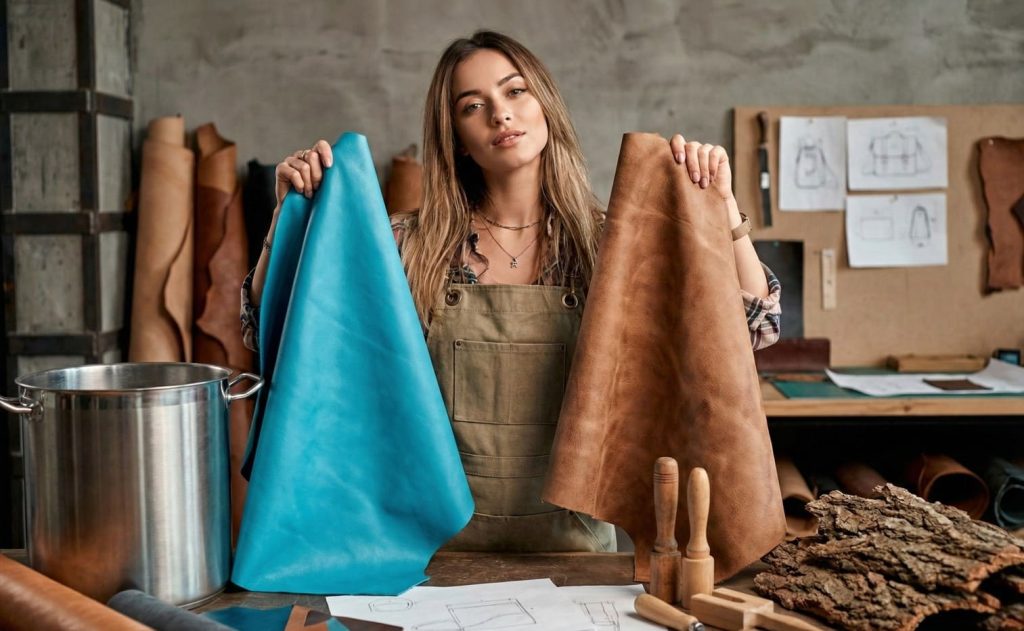
Chrome tanning is currently positioned as the most widely used leather processing method in the global industry, enabling an agile production that meets the immediate demands of contemporary fashion. For anyone seeking a high-end accessory, understanding the origin of the raw material is vital. The durability of a handbag and its ability to withstand the passage of time depend on a fundamental technical decision: the transformation process from hide to leather. In this scenario, the conscious consumer must discern between chemical efficiency and the handcrafted mastery that defines authentic luxury pieces.
The leather goods industry has adopted chrome tanning as its primary standard due to the remarkable speed with which it stabilizes leather fibers. By using mineral salts, this method manages to transform hides into a material ready for manufacturing in less than twenty-four hours. This speed is what allows large supply chains to maintain constant inventories and respond to fleeting market trends. However, this efficiency brings a standardization that often sacrifices the natural identity of the material.
The leather resulting from this chemical process stands out for being extremely light and flexible, facilitating the design of bags with soft structures and fluid drapes. Furthermore, chrome tanning guarantees exceptional color stability, allowing dyes to fix uniformly and ensuring that the color does not easily degrade under sunlight. This characteristic makes it the preferred choice for vibrant-colored accessories or designs that require an impeccable and constant appearance from the very first day of use.
Although chrome tanning offers superior resistance to water and heat, its industrial nature limits the leather’s ability to “breathe” and evolve. Being a process that seals the fibers with heavy metals, the leather loses the organic porosity that would allow it to age naturally. In the long term, these pieces may undergo less aesthetic wear, losing their original structure without gaining that character that only time bestows upon noble materials. Likewise, the environmental impact of this method requires extremely rigorous waste management to avoid damage to local ecosystems.
Contrasting with chemical speed is vegetable tanning, a millenary tradition that honors natural cycles and the artisan’s patience. In this process, synthetic agents are completely eliminated, replaced by organic tannins extracted from tree barks such as oak or chestnut. It is a path that requires weeks of dedication, where each hide rests in natural solutions until reaching perfect maturation, providing it with a structural resistance that the industrial method cannot replicate.
The true magic of vegetable tanning lies in its capacity for transformation. As it is a material treated with organic substances, the leather maintains its porosity and reacts to its environment. With daily use and friction, the leather develops a unique patina, a deep glow, and a softness that is only achieved over the years. Each bag becomes a biographical object that records its owner’s history, gaining aesthetic and sentimental value as time goes by. This is the essence of timeless luxury: pieces that do not expire, but rather mature.
When analyzing a bag manufactured through chrome tanning, the touch is often cooler and more elastic, with a surface that seeks perfection without flaws. In contrast, vegetable-tanned leather possesses an organic warmth and an unmistakable earthy aroma. Visually, vegetable leather proudly displays the animal’s natural marks—small variations in tone that certify its authentic origin. While industrial leather offers static perfection, vegetable tanning proposes a dynamic sensory experience that appeals to the senses and the appreciation of artisan detail.
In the current landscape of 2026, sustainability has ceased to be a trend and has become a manufacturing requirement. The chrome tanning process faces increasing restrictions due to its environmental footprint and potential allergic reactions that heavy metals can cause in sensitive skin. Conversely, vegetable tanning stands out as the healthiest and most ecological option. Being fully biodegradable and hypoallergenic, this type of leather meets the most demanding standards of the circular economy, ensuring that today’s luxury does not mortgage tomorrow’s environment.
The firm Belltower Spain, aware of the importance of preserving the leather-working craft of Ubrique, remains firmly committed to excellence in its materials. Through its platform at belltowerspain.com, the brand offers a catalog where handcrafted quality is the fundamental pillar. By moving away from mass productions associated exclusively with chrome tanning for its most emblematic lines, the house ensures that its bags and wallets possess that robustness and character that only vegetable treatment can bestow upon premium leather.
Visiting belltowerspain.com is to step into a world where time stands still to create objects of desire that transcend passing fashions. The brand does not just sell accessories; it offers a promise of durability and respect for the environment. By choosing products that prioritize vegetable tanning, the customer ensures they are acquiring a piece that will maintain its elegance for decades, supporting an industry that values both the artisan and the planet. Ultimately, the best choice for a bag is one that combines aesthetic sophistication with an unshakeable ethical conscience.